Join WhatsApp Channel
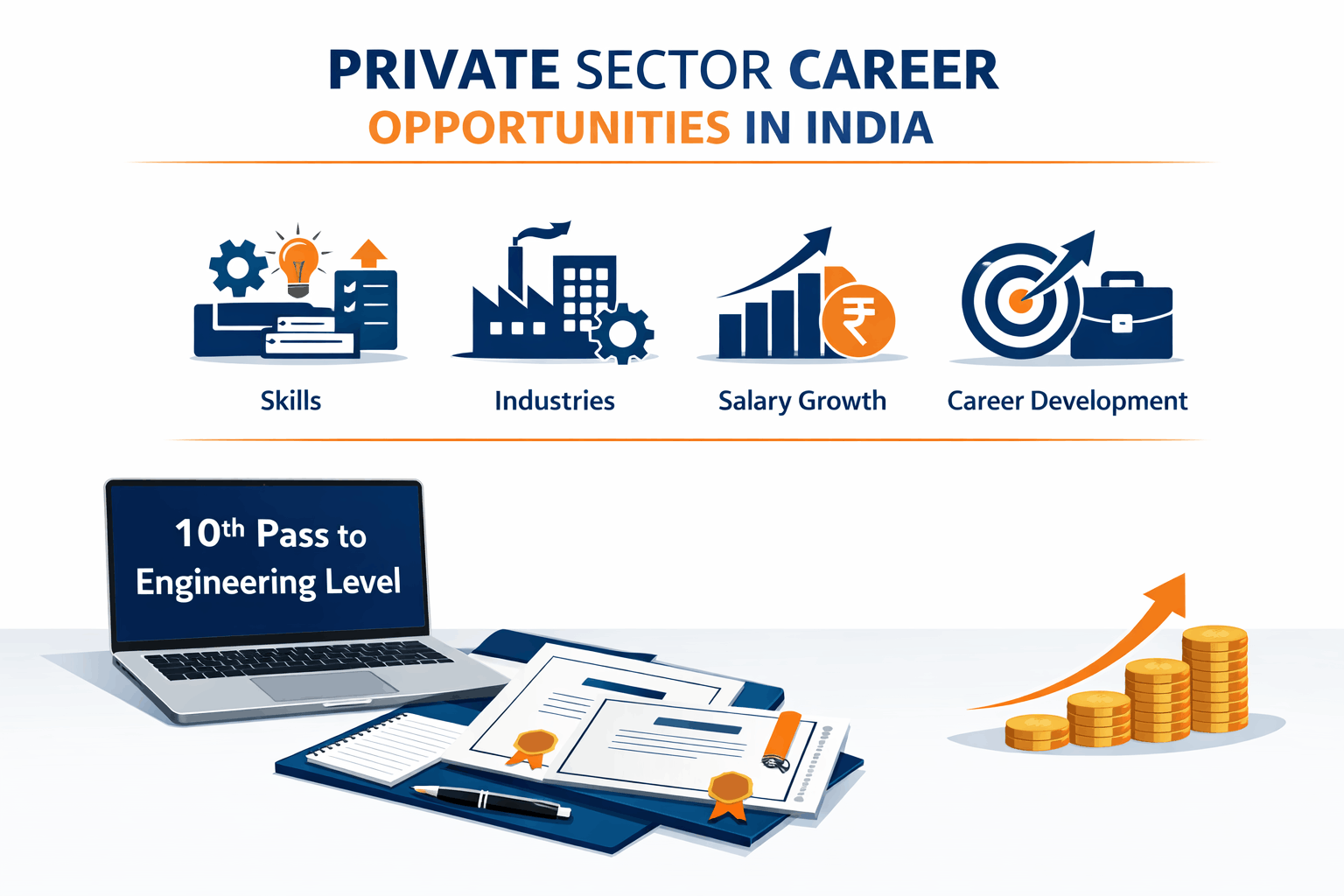
Private sector jobs play a major role in employment in India. Millions of people work in private companies across industries such as IT, manufacturing, healthcare, finance, retail, and construction.
Unlike government jobs, private jobs in india usually focus more on skills, performance, and productivity. Candidates with practical knowledge, certifications, and communication skills often have better chances of getting hired.
This guide explains career opportunities in private jobs for students from 10th pass to M.Tech level, including skills, certifications, salary expectations, and industry opportunities.
Private Jobs in india After 10th Pass
Students who complete 10th class can start entry-level jobs in the private sector. Many companies hire 10th pass candidates for operational and support roles.
Common Job Roles
- Delivery executive
- Office assistant
- Helper / technician assistant
- Warehouse staff
- Retail store assistant
Certifications That Can Help
- Basic computer course
- Retail sales training
- Mobile repair certification
- Electrical technician course
Minimum Qualification
Students must complete 10th class from a recognized board to apply for these jobs.
Courses Students Can Do After 10th
After completing 10th class, students have multiple options to continue their education or develop professional skills. These courses help students enter private sector jobs faster by learning practical skills.
Students can choose from diploma courses, ITI training programs, skill-based certifications, and vocational courses depending on their interests and career goals.
Diploma Courses After 10th
Diploma programs usually last 2–3 years and provide technical knowledge required for industry jobs.
Popular Diploma Courses
- Diploma in Mechanical Engineering
- Diploma in Civil Engineering
- Diploma in Electrical Engineering
- Diploma in Computer Engineering
- Diploma in Electronics Engineering
- Diploma in Automobile Engineering
- Diploma in Information Technology
- Diploma in Chemical Engineering
- Diploma in Mining Engineering
- Diploma in Textile Engineering
Job Opportunities
Students who complete diploma courses can work in:
- Manufacturing industries
- Construction companies
- Automobile companies
- Electrical and electronics industries
Many diploma students later join B.Tech through lateral entry programs.
ITI Courses After 10th
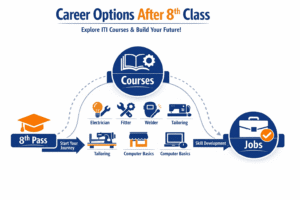
Industrial Training Institutes (ITI) provide practical skill training that prepares students for technical jobs in industries.
Many ITI courses are regulated by the National Council for Vocational Training.
Popular ITI Courses
- Electrician
- Fitter
- Welder
- Mechanic Diesel
- Motor Vehicle Mechanic
- Refrigeration and Air Conditioning Technician
- Electronics Mechanic
- Computer Operator and Programming Assistant (COPA)
- Plumber
- Turner
- Machinist
Industries Hiring ITI Graduates
- Manufacturing industries
- Automobile service centers
- Electrical maintenance companies
- Construction companies
Skill Development Courses After 10th
Skill training programs help students gain job-ready skills in a short period.
Many programs are offered under skill development initiatives supported by the National Skill Development Corporation.
Popular Skill Courses
- Digital marketing course
- Computer hardware course
- Mobile repairing course
- Graphic design course
- Web development course
- Data entry training
Career Opportunities
Students can work in:
- IT service companies
- digital marketing agencies
- technical repair services
- online freelancing jobs
Vocational Courses After 10th
Vocational training programs focus on practical skills required for specific professions.
Examples of Vocational Courses
- Retail management training
- Hospitality and hotel management training
- Beauty and wellness courses
- Photography training
- Fashion designing course
- Food production and catering course
These courses help students start careers quickly in service industries.
Polytechnic Education After 10th
Polytechnic colleges provide diploma-level technical education in engineering fields.
Polytechnic education prepares students for technical roles in industries such as:
- construction and infrastructure
- electrical and power sector
- manufacturing and engineering companies
Students can later pursue engineering degrees through lateral entry admission.
Short-Term Certification Courses
Students who want quick employment can choose short-term certification courses lasting 3 to 12 months.
Examples
- Basic computer certification
- Office management training
- Tally accounting course
- English communication training
These courses improve employability in entry-level private jobs.
How to Choose the Right Course After 10th
Students should consider the following factors before choosing a course:
- personal interests and strengths
- job opportunities in the industry
- duration of the course
- career growth potential
Choosing the right course helps build a strong foundation for future career opportunities.
Private Jobs After 12th Pass
Students who complete 12th grade have more job opportunities in the private sector. Many service industries hire candidates for customer support, sales, and administrative roles.
Common Job Roles
- Customer support executive
- Sales associate
- Data entry operator
- Banking sales executive
- Digital marketing assistant
Certifications That Can Help
- Digital marketing certification
- Tally accounting course
- Data entry certification
- Computer application training
Minimum Qualification
Candidates must complete 12th class from a recognized education board.
Industries Hiring
- Banking and finance companies
- Customer support centers
- Digital marketing agencies
- Retail and e-commerce companies
Private Jobs After Graduation
Graduates from fields such as B.A., B.Com, B.Sc, BBA, and BCA have many opportunities in corporate and service industries.
Common Job Roles
- HR executive
- Marketing executive
- Business analyst
- Content writer
- Sales manager
Certifications That Can Help
- Digital marketing certification
- Business analytics certification
- HR management certification
- Graphic design certification
Minimum Qualification
Candidates must complete a bachelor’s degree from a recognized university.
Industries Hiring
- Corporate companies
- Marketing agencies
- Media companies
- Finance and consulting firms
Graduates can also pursue higher education or professional certifications to increase career growth.
Private Jobs After B.Tech
Engineering graduates have wide career opportunities in the private sector because companies require technical expertise for product development and technology innovation.
Educational Qualification for B.Tech
To pursue B.Tech, students must complete 12th class with Physics, Chemistry, and Mathematics (PCM) from a recognized board. Admission to engineering colleges usually happens through entrance exams conducted by organizations such as the National Testing Agency.
The B.Tech program typically takes four years and allows students to specialize in branches like computer science, mechanical engineering, civil engineering, and electronics.
Common Job Roles
- Software engineer
- Mechanical design engineer
- Electrical engineer
- Automation engineer
- Network engineer
- Data analyst
Certifications That Can Help
- AWS cloud certification
- Java or Python programming certification
- Cyber security certification
- AutoCAD certification
Industries Hiring
- Information technology companies
- Manufacturing industries
- Automobile companies
- Telecommunications sector
- Infrastructure and construction companies
Private Jobs After M.Tech or MBA
Postgraduate students usually qualify for higher-level roles in the private sector.
Common Job Roles
- Project manager
- Research engineer
- Product manager
- Data scientist
- Technical consultant
Certifications That Can Help
- PMP project management certification
- Data science certification
- Artificial intelligence certification
Minimum Qualification
Candidates must complete a master’s degree such as M.Tech or MBA.
Industries Hiring
- Technology companies
- Research organizations
- Consulting firms
- Multinational corporations
Salary Expectations in Private Jobs
Private sector salaries depend on skills, experience, and company size.
| Education Level | Average Starting Salary |
|---|---|
| 10th Pass | ₹8,000 – ₹15,000 |
| 12th Pass | ₹12,000 – ₹20,000 |
| Graduate | ₹20,000 – ₹40,000 |
| B.Tech | ₹30,000 – ₹80,000 |
| M.Tech / MBA | ₹50,000 – ₹1,20,000 |
Salary usually increases with experience and specialization.
Challenges in Private Jobs
Private sector careers can offer fast growth, but they also come with challenges.
Common challenges include:
- High competition during hiring
- Performance-based evaluation
- Frequent skill upgrades required
- Work pressure and deadlines
Candidates who continuously improve their skills usually succeed in the long term.
Financial Stability vs Instability
Private jobs can provide excellent income opportunities, but they may also have some risks.
Advantages
- Faster salary growth
- Performance bonuses
- Opportunities in multinational companies
Risks
- Job insecurity during economic slowdown
- Layoffs in some industries
- Performance pressure
Building strong skills and experience helps improve financial stability.
Conclusion
Private sector jobs provide a wide range of career opportunities for students from 10th pass to postgraduate level. While competition is high, individuals who develop practical skills, obtain certifications, and continuously upgrade their knowledge can achieve long-term success.
Choosing the right skills and industries is the key to building a stable and rewarding career in the private sector.
FAQs
1. Can 10th pass students get private jobs?
Yes, many entry-level jobs such as delivery executive, helper, and retail assistant are available.
2. Which skills are most important for private jobs?
Communication skills, computer knowledge, and technical expertise are highly valuable.
3. Are certifications important for private jobs?
Yes. Certifications demonstrate practical skills and improve job opportunities.
4. Which industry offers the highest private job salary?
IT, data science, and finance industries often provide higher salaries.
5. Can graduates switch careers in private jobs?
Yes. Many professionals change careers by learning new skills.
6. Are private jobs stable?
Private jobs can provide good growth but may have higher competition compared to government jobs.
7. What certification is best for IT jobs?
Popular certifications include AWS, Python programming, and cybersecurity.
8. Do companies prefer skills or degrees?
Most companies value practical skills along with education.
9. How can students improve their chances of getting private jobs?
By learning industry-relevant skills, gaining experience, and improving communication abilities.
10. Is private job better than government job?
Both have advantages. Government jobs provide stability, while private jobs often offer faster salary growth.
Related Career Guides
| Guide | Link |
|---|---|
| Government Job Eligibility Guide | https://jobapplyindia.in/government-job-eligibility-criteria-india/ |
| Government Job Selection Process | https://jobapplyindia.in/government-job-selection-process-in-india/ |
| 10th Pass Government Jobs Guide | https://jobapplyindia.in/10th-pass-government-jobs-in-india/ |
| Government Exam Preparation Guide | https://jobapplyindia.in/government-exam-preparation/ |
Official References
| Authority / Organization | Information Available | Official Website |
|---|---|---|
| Ministry of Skill Development and Entrepreneurship | Skill development programs and training opportunities | https://www.msde.gov.in |
| National Skill Development Corporation | Skill certification and vocational training programs | https://nsdcindia.org |
| National Career Service | Job search and career guidance resources | https://www.ncs.gov.in |
| Ministry of Labour and Employment | Employment policies and workforce information | https://labour.gov.in |